For more information on our content creation process, view our Editorial Policy.
Key Takeaways
Dress one level above the training floor: If trainers wear gym gear, show up in smart gym wear or business casual with an athletic edge. It communicates professionalism while still fitting the environment.
Smart athletic wear is the new standard: Across TikTok, Reddit, and fitness forums, fitted polos, sleek leggings, or clean joggers in neutral colours are the most praised interview choices.
Match the gym’s culture: Corporate gyms expect polish and brand alignment; boutique studios value style and intentionality; CrossFit boxes favour authenticity and practicality.
Presentation matters more than formality: Clean, coordinated, and well-fitted clothing stands out far more than a full suit or designer outfit. Scuffed sneakers and worn gear are deal breakers.
Walking into a gym interview isn’t like stepping into a corporate boardroom; it’s a different kind of professional setting, but one where appearance still shapes first impressions.
Real Stories: How People Dressed for Gym Interviews
We researched on Reddit, TikTok and Facebook groups to dig real stories about what people wear for a gym interview.
One personal trainer shared a strategy that worked well across multiple interviews: match the energy and style of the gym you’re applying to.
“I always go according to what everyone is wearing. My goal is to seem like one of them, not an outsider.” For their current personal training role, the outfit was simple—a pair of quality training shorts, an athletic long-sleeve top, and training shoes. The visual alignment with the gym’s culture made them feel like a natural fit from the start.
Prepared for Every Possibility
Taking no chances, another candidate chose a full formal approach, shirt, tie, and trousers. However, they didn’t ignore the physical nature of some interviews.
“Because it’s a gym-based interview, I never know if there will be a practical element.” A backup gym outfit always came along. With that method, they were ready to shift into high-performance mode if the situation called for it.
When interviewing for a role or evaluating candidates as a gym manager, one industry professional looked beyond the clothes. Still, presentation mattered. “Golf casual would work—an Under Armour polo and slacks with clean, fresh sneakers.” Across dozens of interviews, they saw business casual, business formal, stylish athleticwear, and even designer sweats—what counted most was confident presentation. A subtle rule? “No lawn mower sneakers.” A clean, intentional outfit helped set the right tone before the conversation even began.
Location Shapes Expectations
In the southeast UK, one trainer highlighted how regional norms influenced interview attire. “Polo shirt and khakis are pretty much standard for business casual around here.” For women, a skort or khaki pants with a polo made sense.
More than style, condition mattered. “I’ve had people show up in clothes that might’ve flattered them once, but now looked worn, stained, or tired.” The best-fitting outfit is only a win if it’s also fresh and well-kept.
Thinking about your own gym interview? Reflect on these real experiences.
What habits do you want to adopt?
What would show the team you’re ready to be one of them?
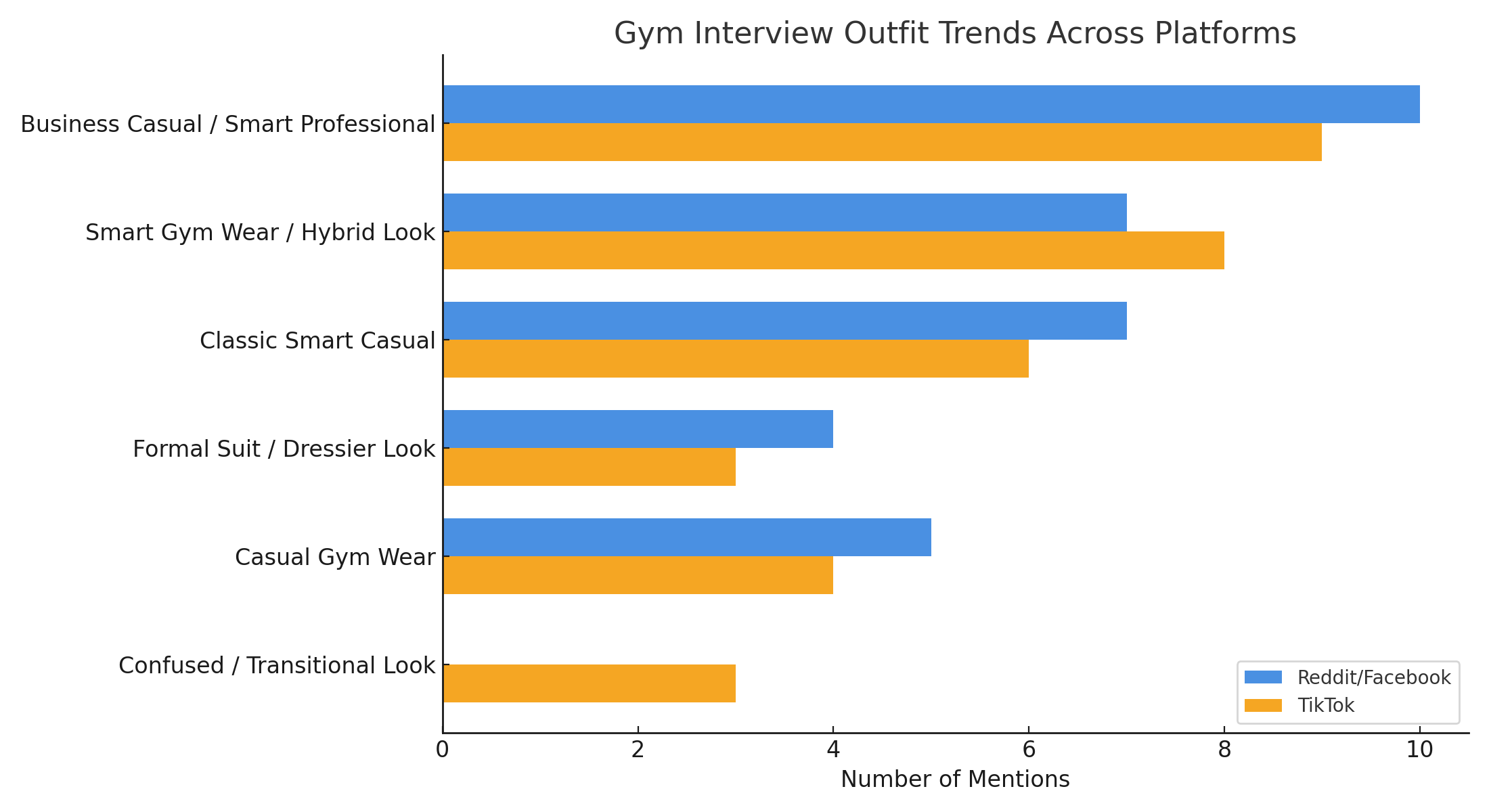
“Gym Interview Outfit Trends Across Platforms” — showing Reddit/Facebook (blue) vs TikTok (orange) insights:
From personal experience?
At every fitness interview I attended, I was explicitly told to show up in athletic clothes, specifically, what I’d wear to train a client. Leggings and a clean, fitted athletic top became my go-to outfit.
No flashy logos, no oversized hoodies. Just a sharp, professional version of my daily training wear. I was offered most of the positions I interviewed for, accepted two, and turned down one. So when in doubt, step into your athletic identity with poise: they want to picture you on the floor with clients, not behind a desk.
Corporate vs Boutique vs CrossFit: Dress Code Guidelines
The type of gym defines the tone of your outfit. What works for a fitness interview at Equinox won’t play the same way inside a gritty CrossFit box or a minimalist barre studio.
Let’s break it down by category.
Corporate Gyms: Polished with a Performance Edge
Chain gyms like LA Fitness and Equinox lean toward a business-meets-fitness aesthetic. When the dress code isn’t explicitly stated, default to clean, strategic choices that project polish and readiness. Think business casual, but infused with athletic sensibility.
Solid colour collared workout tops—polo style or fitted performance fabrics
Trim-fit joggers or tailored athletic pants, not loose sweats
Clean, unscuffed sneakers; ideally in a muted or neutral colour
If the brand has its own gear, wearing it shows alignment and initiative. This is especially true at high-touch brands like Equinox, where culture and presentation hold weight.
Boutique Studios: Elegant, Modern, Intentional
Spinning, Pilates, barre, and yoga studios typically operate with strong aesthetics. Anyone walking in, including trainers, becomes part of the visual continuity. Dress to mirror that curated vibe: sharp, minimal, and intentional.
Form-fitting activewear in complementary or on-brand tones
Neat layering—cropped pullovers, fitted hoodies, or sleek zip-ups
Discreet accessories (if any), like a monochrome smartwatch or a slim headband
Skip flashy logos unless they match the studio’s partner brands. This setting rewards attention to detail—your look should suggest professionalism and style without noise.
CrossFit Boxes & High-Intensity Training Spaces
Walk into a CrossFit box, and you’re entering a world built around grit, intensity, and authenticity. Don’t over-style. Interviewers will assess your outfit for practicality, not polish.
Breathable, durable training wear from reputable fitness brands
Shorts or leggings designed for range of motion and performance
Metcon-style or lifting-specific shoes; no lifestyle sneakers here
If you’ve coached or trained in branded apparel from a previous box or affiliate, wear it. Your clothing should show you understand the environment and can move, lift, and teach, even during the interview.
Brands That Speak Fitness: Choosing What to Wear for Your Gym Interview
Not all activewear brands speak the same language—some whisper subtle professionalism, others shout performance dominance.
The brand you choose for your gym interview gives an immediate signal about how well you understand the industry vibe.
Let’s break down what each top activewear brand says when you walk through that door.
Lululemon: Boutique Elegance Meets Athletic Edge
Walk into a boutique studio interview wearing Lululemon, and you project polish and presence. Known for sleek designs and premium fabrics, their gear works especially well for roles in aspirational fitness spaces—think reformer pilates, barre, or upscale HIIT studios.
Men: A Commission Pant paired with a metal vent tech short sleeve strikes a smart-athletic balance.
Women: The Align Pant with a defined jacket adds form with just enough function.
Colour choice matters. Go for solid neutrals—black, charcoal, deep navy—nothing too loud. That says, “I lift, but I also lead small group training.”
If you’re interviewing at a strength-focused gym or a CrossFit box, Gymshark fits. It carries intensity in its aesthetic, but opt for their understated pieces if you want to avoid looking like you’re here to film a TikTok PR attempt.
Stick with fitted tees or training quarter-zips in neutral palettes.
Avoid heavy logo placements and vibrant prints—save that for leg day content, not the interview room.
Gymshark shows you’re in the know with current gym trends, but choosing minimalist designs lets your professionalism, not just your quads, do the talking.
Nike has range. You can wear it to an interview with Anytime Fitness, corporate wellness centres, or chain gyms like LA Fitness. Stick close to performance basics—no team logos, no flashy colourways.
Dry-FIT polos or a solid Tech Fleece jogger set create a put-together look with athletic function.
Keep footwear subtle—all-white or all-black Metcons or trainers.
Nike says you understand the basics of sportswear without going too niche. It’s a safe, strong statement: “I move well, and I help others move smarter.”
Adidas: Streamlined and Understated Performance
Choose Adidas if your target employer leans minimalist but loves classic sport heritage. Their training collections are less flashy than Nike’s but still performance-driven.
Women: The Aeroready crop with high-waisted Techfit tights reflects performance with control.
Men: Three-stripe tapered pants and a breathable training tee won’t steer you wrong.
No soccer jerseys. No oversized Trefoil hoodies. This isn’t ‘90s revival day, it’s an audition to coach health.
Under Armour: Power Play for Performance-Focused Interviews
If the role is in a performance training facility, sports academy, or strength centre—Under Armour delivers. It’s less about athleisure, more about grind culture. You show up in UA, you’re telling them you’ve been in the trenches with varsity athletes.
Opt for textured taper-fit pants with a compression-fit tee, layered under a fitted training hoodie.
Don’t go fully compression top-to-bottom—save the superhero look for the weight room.
Under Armour lends weight to your first impression: “I train hard and bring structure to every session.”
Alo Yoga: Wellness Authority with City Aesthetics
Yoga studios, holistic fitness spaces, or corporate offices hiring wellness coaches respond extremely well to Alo Yoga’s clean aesthetic and contemporary cuts.
Monochrome looks build authority without looking showy.
Pair tailored legging styles with cropped hoodies, zip jackets, or modular tanks.
Footwear? Stick with minimal slides or all-white sneakers. Flashy trainers interrupt the calm, curated energy that Alo naturally brings in. Think wellness professional, not festival-ready influencer.
Reebok: Functional, Honed, and CrossFit Credible
Still linked tightly to CrossFit lineage, Reebok thrives in strength-and-conditioning environments. If your role involves Olympic lift coaching, athlete programming, or small group functional training, this brand works in your favour.
Men: Nano trainers with a performance hoodie and woven joggers with broadcast capability.
Women: Control sports bras under subtle crop tanks, paired with Form knit leggings, blend grit and polish.
Reebok hints at a coach who’s hands-on, technically skilled, and ready to correct form mid-thruster with clarity.
Accessories and Makeup: Keep It Professional and Purposeful
Every detail contributes to your presentation during a gym interview—right down to your jewellery and makeup. When movement may be part of your assessment, your look must function as well as it flatters.
Jewellery: Keep it Minimal and Functional
Necklaces that swing distract. Earrings that dangle tug or catch. Bangles jingle and interfere with hand movements. Go with pieces that are subtle, secure, and easy to forget—stud earrings, a slim fitness tracker, or a plain wedding band if you wear one.
Stud earrings stay in place and won’t catch on equipment or hair.
Wristwear should be lightweight—skip metal bangles or anything that moves excessively.
Necklaces and chains? Best left at home unless tucked completely inside your shirt.
The goal is simple: nothing noisy, dangling, or that gets in the way. Imagine leading a mobility drill or performing a squat assessment mid-interview—can you handle it without creating distractions?
Makeup: Keep it Clean and Sweat-Proof
Choose makeup products that can handle a light physical workload. Go for matte, sweat-resistant formulas that don’t demand constant checking or reapplication. Think natural brows, light mascara, and breathable skin coverage if needed.
Tinted moisturisers or BB creams with SPF keep skin even without caking.
Setting powder locks makeup in place and keeps your face shine-free under gym lighting.
Neutral tones—nothing glittery or harshly contoured—mirror the gym’s professional tone.
If you’re wearing makeup and suddenly asked to demonstrate a TRX plank or conduct a partner stretch, no one should question whether your eyeliner will survive it. They won’t even notice it—that’s the mark.
Nails: Understated and Clean
Neon polish chips. Rhinestones snag. Long acrylics can affect your grip and look out of place in most training environments. Keep nails short, clean, and in neutral or bare shades. No one’s judging your cuticle game—but they’ll notice if your hands can’t support a kettlebell demo.
FAQs on What to Wear for a Personal Training Interview
What’s the safest outfit choice for a gym interview?
You can’t go wrong with business casual that leans athletic, think polo or fitted performance top with khakis, joggers, or sleek leggings. It shows professionalism without looking out of touch with gym culture.
Can I wear gym clothes?
Yes, if they’re clean, fitted, and purposeful. Athletic wear is totally acceptable in functional or boutique gyms, especially if it’s something you’d comfortably train clients in. Avoid old, oversized, or flashy gear — the goal is polished, not “post-workout.”
Should I dress differently for a corporate vs a boutique gym?
Definitely. Corporate gyms like Equinox or LA Fitness prefer a more refined look — collared performance tops, neutral colours, and neat shoes. Boutique or CrossFit environments lean toward authentic, practical attire — sleek leggings, fitted tees, or branded gym wear that shows you understand the space.
Do I need a suit or a formal outfit?
Usually not. Full suits or ties can feel overdone in fitness settings. A smart-casual or athletic-professional outfit strikes a better balance between credibility and approachability.
What about makeup, hair, and accessories?
Keep it clean, simple, and functional. Sweat-proof makeup, tidy hair, and minimal jewellery show that you’re ready to move if the interview includes a demo. The key is to look natural and confident.
Other content you might like
Business & Marketing
The 15 Best Personal Trainer Jobs in 2026 (Expert Picks)
Key Takeaways We’ve curated 15 expert-backed career paths for personal trainers. Each role includes qualifications, salaries and growth opportunities. Gym-Based...
11 Personal Trainer CV Examples That Actually Land Jobs in 2026
Key Takeaways The fitness industry rewards specialists who can demonstrate measurable results. Whether you’re targeting online training, corrective exercise, or...